Build
Backend & API development developers enjoy integrating with.
A good API is a product in its own right. We design services and integrations with clear contracts, predictable errors, versioning and documentation, so your partners integrate in days rather than weeks.
- Backend & APIs
- 4–12 weeks
When to call us
Sound familiar?
- 01
Partners or customers need a public API to integrate with you.
- 02
Your systems exchange data through spreadsheets, scripts or manual steps.
- 03
Your backend is slow, fragile or impossible to change safely.
How Tulmira handles it
Our approach, step by step
- 1
Contract first
We agree the API in an OpenAPI or AsyncAPI specification with its consumers before writing the implementation.
- 2
Model the data
A data model designed around how the business works, with migrations and integrity rules in the database.
- 3
Build and harden
Authentication, rate limits, idempotency and observability added as standard, not as an afterthought.
- 4
Document and support
Reference docs, examples and a sandbox, so integrators succeed without opening a support ticket.
Our standards
Non-negotiable practices
- Contract tests that fail the build when an API changes unexpectedly
- Versioning and deprecation policies agreed up front
- Consistent, documented error responses
- Structured logs, metrics and tracing on every service
- Secrets in a vault, never in code or config files
- Load-tested before launch at realistic peak traffic
What you get
- Production services with OpenAPI or AsyncAPI specifications
- Developer documentation and a sandbox environment
- Integration tests and contract tests in CI
- Monitoring dashboards and alerting
Tools we use for this
- Spring Boot
- Node.js
- PostgreSQL
- Kafka
- Redis
- OpenAPI
Proof
Built the same way we build our own products
Proxar
Developer Tools
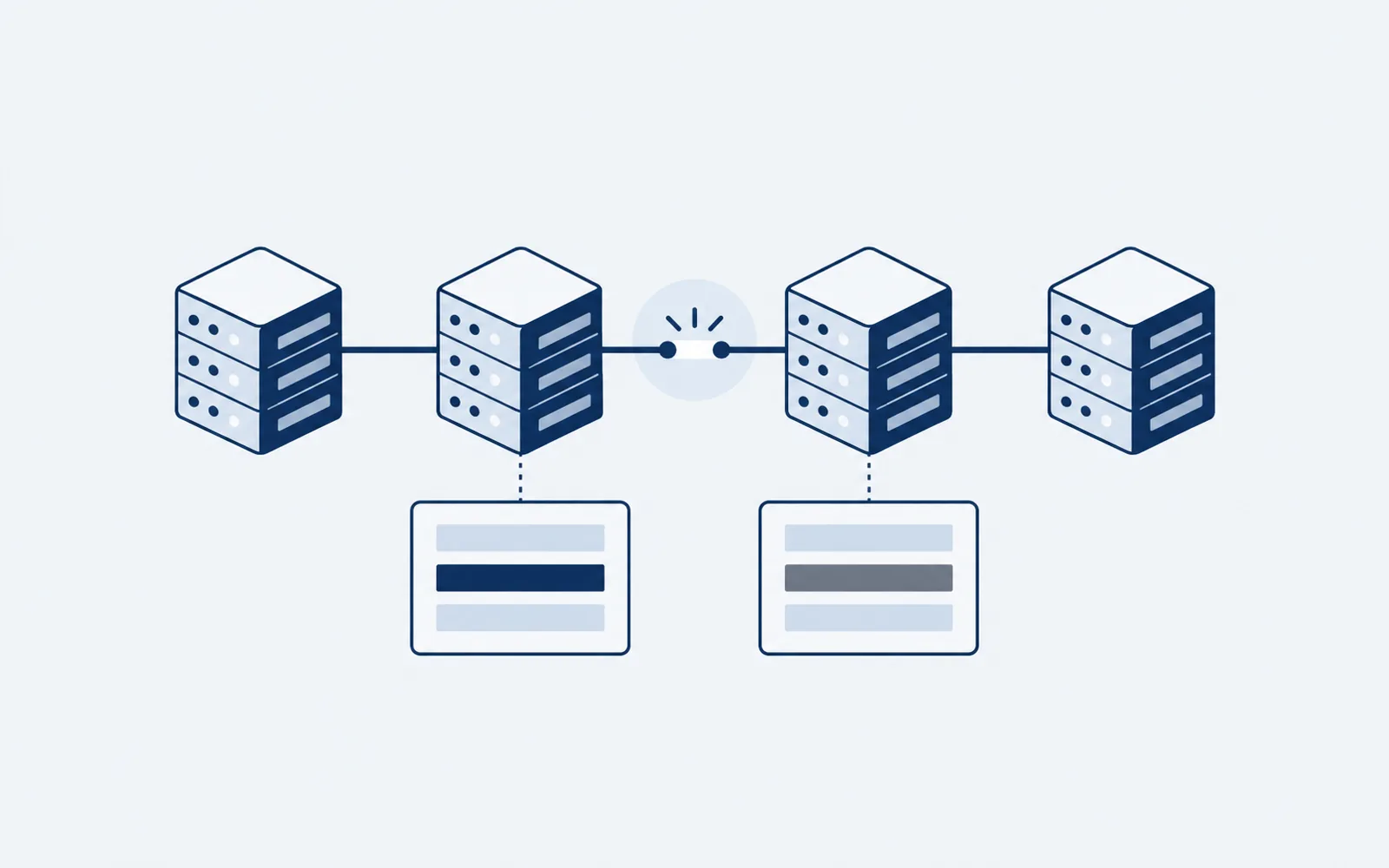
Proxar's semantic diff engine detects API and schema changes before they break integrations.
See Proxar →Keep reading

It depends on who consumes the API. REST suits most public APIs, GraphQL suits complex front ends, and events suit systems that react to change. Many products use a mix.
Yes: ERPs, CRMs, payment providers, identity providers and legacy databases. We start by mapping each system's real behaviour, not just its documentation.
Contract tests, explicit versioning and deprecation windows. Breaking changes are announced and supported, never surprises.
Mostly Java with Spring Boot and TypeScript with Node.js, on PostgreSQL, with Kafka or Redis where the workload calls for them. If your team already works in another stack, we take that into account, because you will be maintaining it.
We agree expected peak traffic up front, load-test against it before launch, and add caching, queues or read replicas only where the measurements show they are needed.
Every API ships with reference documentation generated from its OpenAPI or AsyncAPI specification, worked examples and a sandbox. Client SDKs can be generated from the same specification when your integrators need them.
Related services
Web applications
Fast, accessible front ends for complex workflows: dashboards, portals and internal tools.
- Angular
- React
- TypeScript
Data engineering & analytics
Reliable pipelines, a clean warehouse and dashboards people trust, ready to feed reporting and AI features.
- ETL
- Warehousing
- BI
AI agents & MCP servers
Agents that act on your systems safely: MCP servers for your data and tools, OAuth, guardrails, human approval and full audit logs.
- Agents
- MCP
- Guardrails
One email a month. Only new posts.
No tracking pixels, no promotions. Unsubscribe in one click.
Ready to talk about Backend & APIs?
Projects typically start from a scoped proposal. We reply within 2 working days.
Start a project